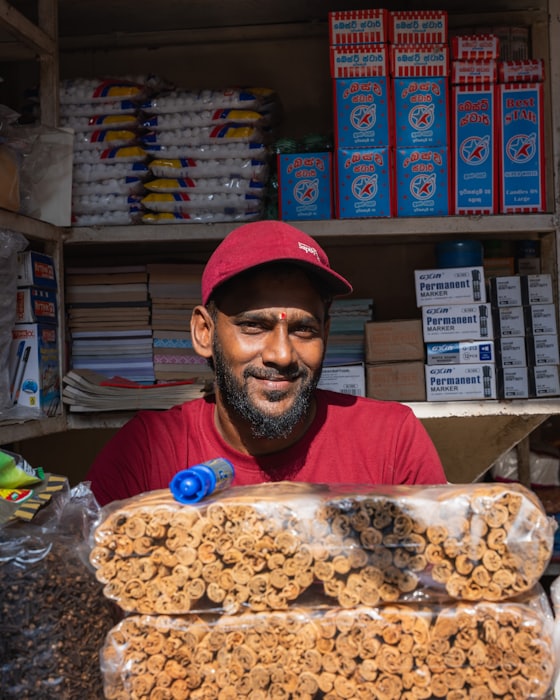
Independent retail and services
Ask the people who walked out without buying why they walked out. One QR code by the till is a standing study.
Say what you want to learn. inview writes a spoken survey, hands you one link to send, and has a real two-minute conversation with everyone who opens it — asking follow-ups where a form would have moved on.
Nothing to install — for you or for the people you interview. They open a link and talk.
When you last bought tissue paper, what made you pick that pack?
Price, mostly. Though the last one I got tore too easily.
You mentioned it tore — was that a one-off, or does it happen with the cheaper packs?↳ followed up
Most of them. I buy the two-ply now even though it costs more, because I end up using half as much.
“I buy the two-ply now even though it costs more, because I end up using half as much.”
Illustrative interview from a demo study. Counts are people, never mentions.
A written survey is something to get through. Answers arrive flat, minimal and unfalsifiable — you learn that price scored 4 out of 5, and nothing about why. A spoken interview is a social situation: people explain themselves, and a good interviewer knows which sentence to pull on.

The interview that produces a usable answer has always been a conversation. inview runs that conversation at the scale of a survey.
Price: 4 / 5. True, unarguable, and it tells you nothing you can act on.
“I buy the two-ply now even though it costs more, because I end up using half as much.”
Not a price complaint at all. A false-economy complaint — and now you know what to put on the pack.
Type it the way you'd explain it to a colleague. inview turns the brief into a spoken survey — questions, objectives, follow-up budget and a screener if the study needs one. Edit anything, or just tell it what to change.
Publish and you get a link. Put it in a WhatsApp broadcast, an email, a receipt, a QR code on the counter. Whoever opens it presses one button and talks. No account, no app, no download — it runs in the browser they already have.
Answers are grouped into themes as they arrive, each with the number of people behind it and the quotes that make the case. No transcript pile to wade through, and nothing invented — every theme traces back to sentences people said.
Themes overlap — the same person can appear under more than one — so these do not add up to 100%.
This is the results page, at full size, from the study in the hero. Counted themes, the sentences behind them, and an honest account of how many people each number represents.
22 of 22 responses · closed 2 days ago
Trying to learn: which attribute actually drives the choice
Themes overlap — the same person can appear under more than one — so these do not add up to 100%. Bars are scaled against the 18 people who answered this question.
People who buy on price report going through packs quickly and tearing them, and several have since traded up to a thicker pack for the same weekly spend.
“I buy the two-ply now even though it costs more, because I end up using half as much.”
“It finishes before the week is out. That is not cheap, that is just a smaller pack.”
Themes were found and counted across 22 interviews. Every count is a number of people, never a number of mentions. Quotes are verbatim. Themes are not mutually exclusive, so their counts can add up to more than the number of respondents.
Research is only worth anything if you can trust the number. inview is built to under-claim rather than to flatter.
A theme mentioned five times by one talkative respondent counts once. Every number on the page is a number of humans, and it says so.
Below ten responses you get counts, not percentages. One person is 20% of five, and rounding that invents precision the study does not have.
Nothing is paraphrased into something more quotable. Every theme is traceable to sentences a person actually said out loud.
Response rate is the whole game, so the respondent's page is the most carefully built screen in the product. It loads no webfont, no framework and no tracker, and it works on a cheap handset over a bad connection.
You've been asked to take part in a short spoken interview. It takes about two minutes, and you talk instead of typing.
The page a respondent actually opens.

A study that used to mean an agency, a recruiting screener and six weeks now means a sentence and a link. The people you want to hear from are already carrying the only equipment required.
Ask the people who walked out without buying why they walked out. One QR code by the till is a standing study.
Test a pack, a price or a name against real buyers in a day, and hear the objection in the words they would use to a friend.

Churn interviews, onboarding friction, pricing objections — run continuously instead of once a quarter when someone finds the time.
Describe what you want to learn. You'll have a survey in about fifteen seconds and a link to send straight after.
You can write and preview a whole study before you sign up for anything.